

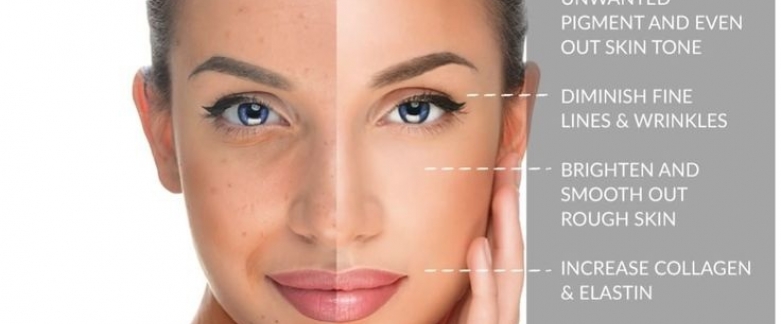
Chemical peeling is the application of a chemical agent to the skin, which causes controlled destruction of a part of or the entire epidermis, with or without the dermis, leading to exfoliation and removal of superficial lesions, followed by regeneration of new epidermal and dermal tissues.
Indications for chemical peeling include
pigmentary disorders,
superficial acne scars,
ageing skin changes,
and benign epidermal growths.
Contraindications include patients with active bacterial, viral or fungal infection, tendency to keloid formation, facial dermatitis, taking photosensitizing medications and unrealistic expectations.
The need for postoperative medical therapy should be emphasized.
Superficial peels are considered safe in Indian patients.
Medium depth peels should be performed with great caution, especially in dark skinned patients.
Deep peels are not recommended for Indian skin.
It is essential to do prepeel priming of the patient's skin with sunscreens, hydroquinone and tretinoin for 2-4 weeks.
Endpoints in peels: For glycolic acid peels: The peel is neutralized after a predetermined duration of time (usually three minutes).
The end-point is frosting for TCA peels, which are neutralized either with a neutralizing agent or cold water, starting from the eyelids and then the entire face.
For salicylic acid peels, the end point is the pseudofrost formed when the salicylic acid crystallizes. Generally, 1-3 coats are applied to get an even frost; it is then washed with water after 3-5 minutes, after the burning has subsided.
Jessner's solution is applied in 1-3 coats until even frosting is achieved or erythema is seen. Postoperative care includes sunscreens and moisturizers Peels may be repeated weekly, fortnightly or monthly, depending on the type and depth of the peel.
Do you really want to get rid of your Acnes / Acne Scars
Book an Appointment Now
"Switch off the flame rather than wiping off the milk!"
Address: No. 9, 1st floor, Venkatarathinam Nagar Main Road, 1st Ave, behind IOB bank, Indira Nagar, Adyar, Chennai, Tamil Nadu 600020
Phone: +91 80561 47306
Email: info@buviisdermagicalz.com